
SOFTWARE & AUTOMATION
FOR BAKERIES.
HWP.1 / HWP.8 / HWP.9 · WEIGHING HOPPERS
Weigh the ingredients.
Feed the mixer.
Bring flour and other suitable dry ingredients to the mixer in the quantities the recipe needs. NIO HWP weighing hoppers receive pneumatically conveyed ingredients, weigh the additions and discharge into the next process. Choose direct supply to the mixer or prepare ingredients in advance.
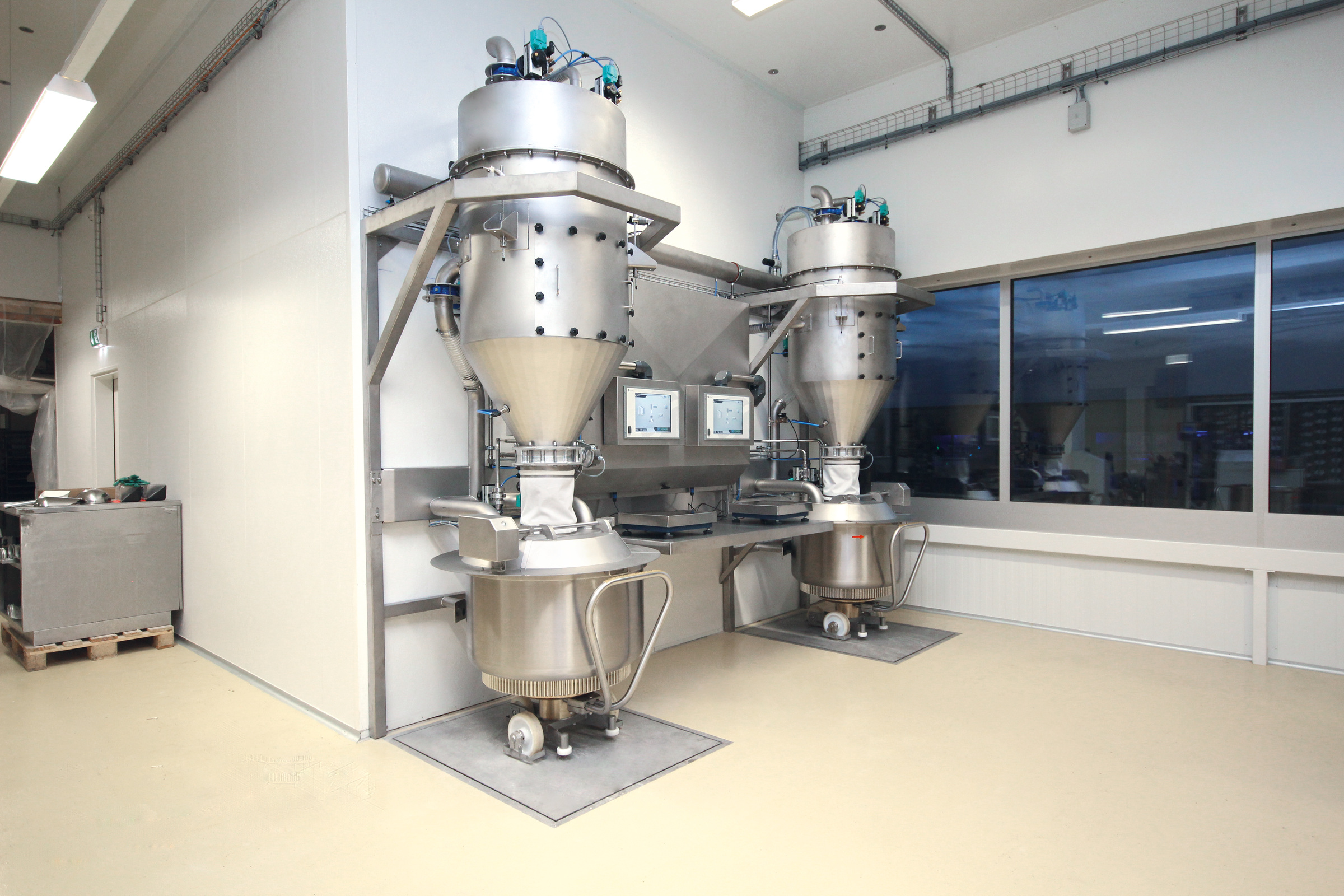
Two weighing hoppers in a NIO installation
DIRECT DOSING OR ADVANCE PREPARATION
Dose at the mixer.
Or get the next batch ready ahead of it.
HWP.8 brings several ingredient lines together at the weighing point above a mixer bowl or a directly connected kneader. It suits a process in which the ingredients are collected, weighed and then released where the batch is made.
HWP.9 prepares a dry-ingredient recipe upstream of the main HWP.8. Its rotary feeder sends the prepared material back into the conveying line. That separates ingredient preparation from the moment it is needed at the mixer, which can help when those tasks compete for time.
01 · Bring ingredient lines together
The hopper receives material from suction or pressure conveying and separates the conveying air through its filter. Several supply lines can feed one weighing point, reducing the need for separate ingredient handling at the mixer.
02 · Weigh for the recipe
Load cells report the ingredient weight to the control system. Patriq uses the returned values in the dosing sequence and batch record, connecting what arrived in the hopper with what the recipe requested.
03 · Transfer into the process
The HWP.8 discharges towards the bowl or kneader. The HWP.9 uses a rotary feeder for onward conveying. Filter cleaning and the selected discharge assistance help material leave the hopper for the next stage.
INSTALLED EQUIPMENT AND COMPONENTS
See the weighing point in production.
-
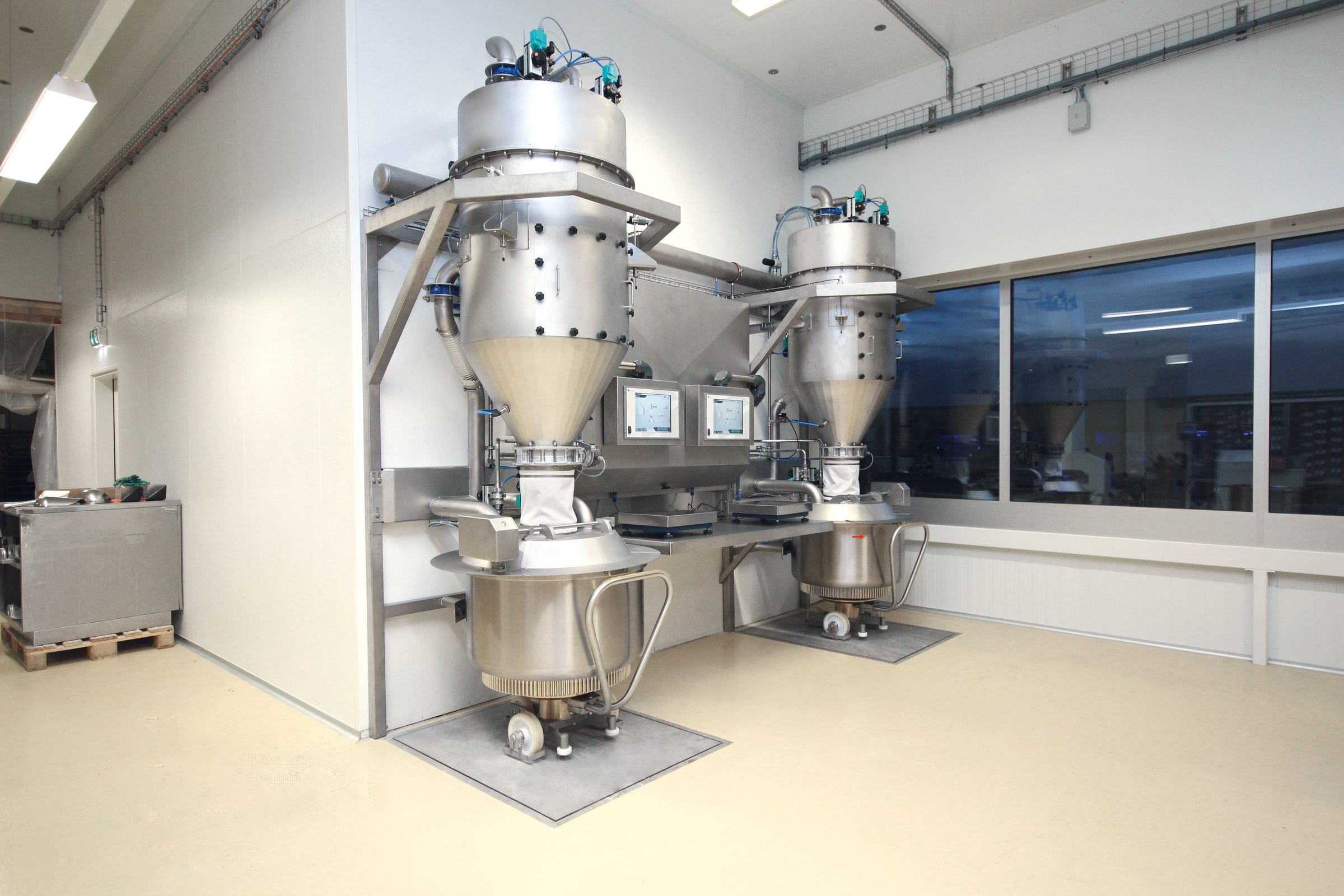
- Weighing above the mixer — Two weighing hoppers feed mobile mixer bowls, with dust hoods around the discharge points.
-
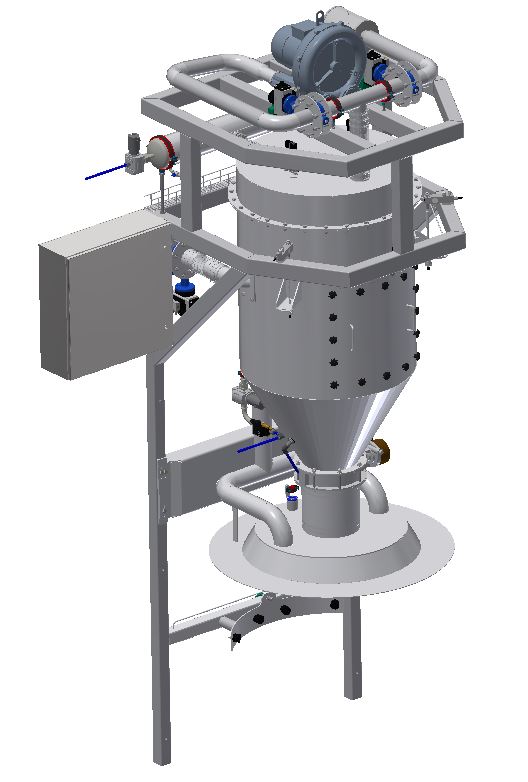
- HWP.8 weighing hopper — The main weighing hopper collects ingredients and discharges towards the bowl or kneader.
-
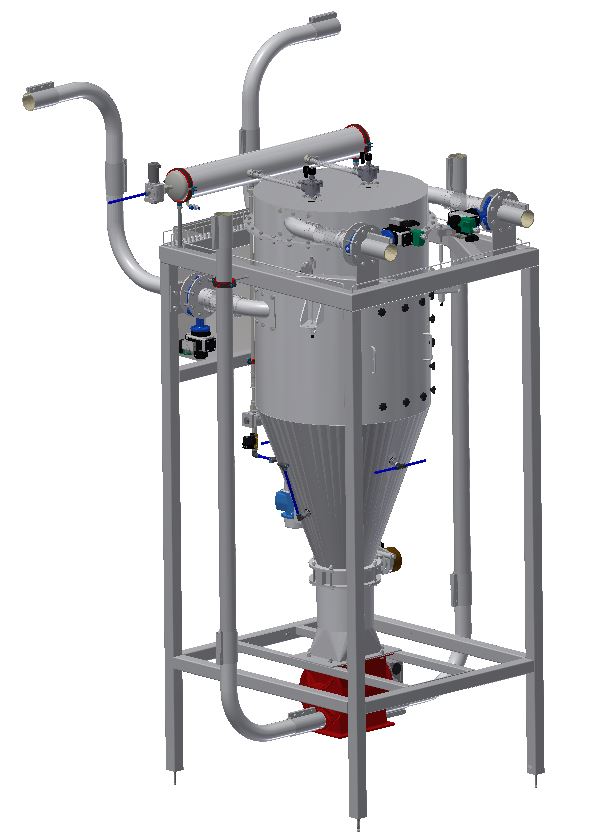
- HWP.9 advance preparation — The intermediate weighing hopper prepares dry ingredients for onward conveying to the main weighing point.
-
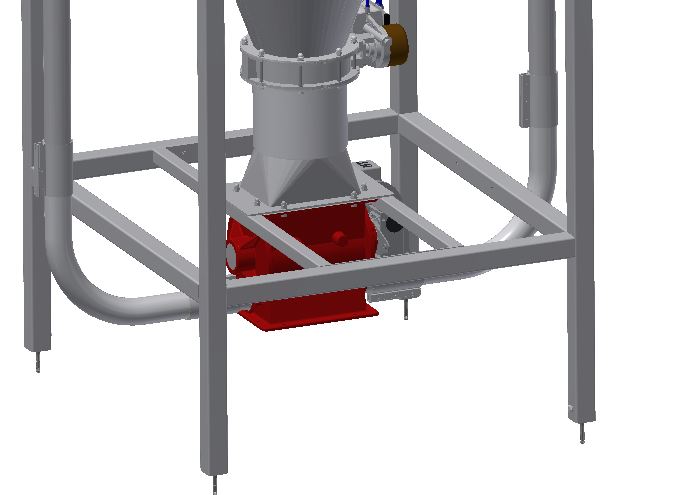
- HWP.9 conveying connection — The rotary feeder sends prepared dry ingredients into the conveying line.
-
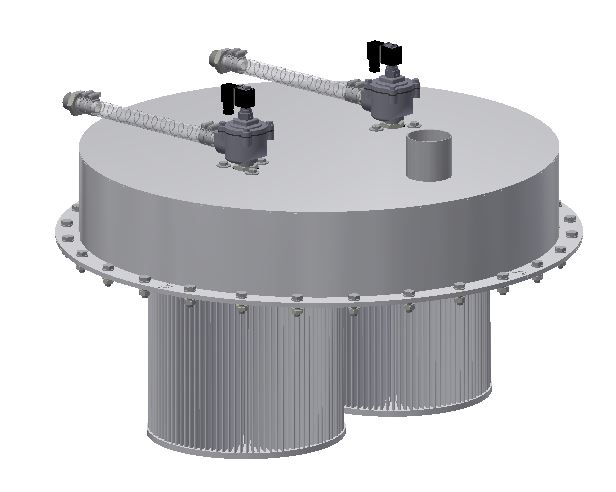
- Filter assembly — The filter separates the conveying air from the ingredients. Filter type and cleaning system depend on the model.
-
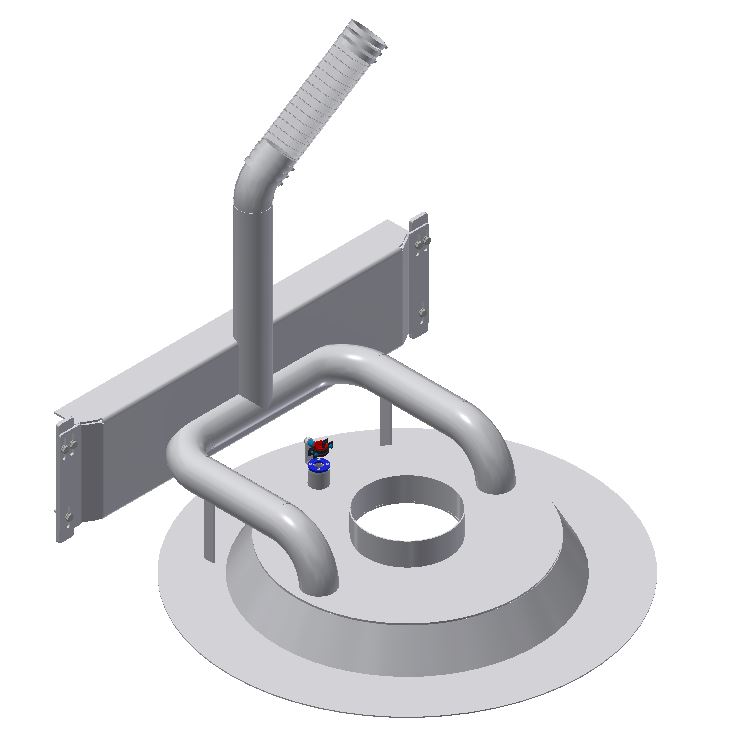
- HWP.8 dust hood — The hood helps contain dust at bowl discharge and can carry connections for liquid additions.
SELECT THE WEIGHING POINT
Choose the function
your line needs.
Your batch sizes, ingredients and mixer arrangement set the starting point. We match the hopper capacity, number of inlets and discharge arrangement to the job, then integrate it with the available conveying routes.
HWP.8 offers a modular choice of material inlets, liquid connections, an automatic ingredient flap and bowl detection. Direct kneader integration is also possible. Select the functions that remove unnecessary handling from your process.
HWP.1 ECO: a compact, fixed specification.
HWP.1 ECO provides two ingredient inlets, jet-cleaned fine filters, a compressed-air buffer, a dust hood and aeration/vibration assistance. It needs an external dust extraction system. Choose HWP.8 for more configuration options, or HWP.9 when ingredients should be prepared upstream.
HWP.8 / HWP.9 pipe sizes
DN 50, DN 60, DN 76 or DN 90
Conveying principle
Pneumatic suction or pressure conveying
HWP.8 / HWP.9 filter systems
Multijet or rotary-nozzle cleaning, depending on model
Discharge assistance
Aeration and/or vibration to suit the ingredient
Installation options
Compatible wall, ceiling or floor frame
HWP.9 transfer
Rotary valve with conveying pipe
MAKE THE WEIGHING POINT WORK FOR YOUR TEAM
Plan around the bowl,
the ingredients and the operator.
An optional HWP.8 dust hood helps contain dust when ingredients fall into the bowl. Its extraction arrangement returns captured ingredient material to the process, and liquid connections can bring further recipe additions to the same point. We coordinate the hood with the bowl and extraction system.
Mobile bowls need a different layout from a fixed kneader connection. We plan the discharge point, bowl movement and access to the controls around the work your operators do every day.
Ingredient changes and cleaning also influence the design. We include access to filters and product-contact components when choosing the arrangement, so the station can be serviced within the space available.
PART OF THE RECIPE, NOT A SEPARATE ISLAND
From ingredient supply
to a recorded batch.
Patriq coordinates the weighing hopper with silos, BigBag stations and small-ingredient dosing. It brings supply, weighing and discharge into the batch sequence, with the actual quantities available in the production record.
A new weighing point can extend an existing bakery. We assess the conveying equipment, mixers and controls already in place, including other manufacturers’ equipment, and focus the project on the part of production that needs to improve.
FROM RECIPE TO PRODUCTION.
© 2026 Nio Mechatronik GmbH
Salzburger Straße 44 · 4690 Schwanenstadt · Austria